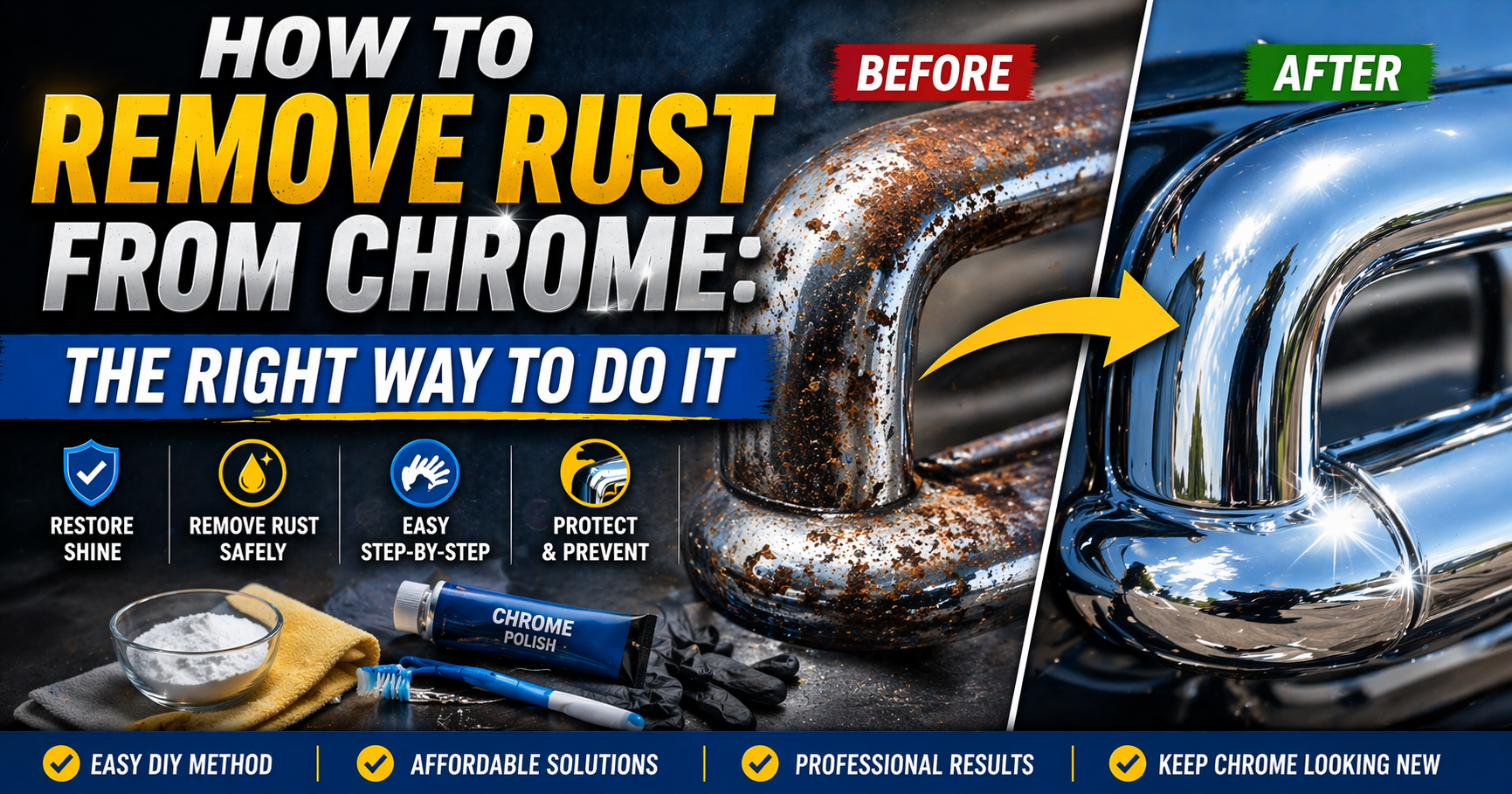
Chrome looks indestructible. That mirror-bright finish feels permanent until one day you spot a cluster of reddish-brown spots spreading across a bumper, a tap fitting, or a set of handlebars. Here’s something most people don’t know: that isn’t actually the chrome rusting. Chrome itself doesn’t rust. What you’re seeing is the steel underneath corroding, pushing through microscopic cracks or pinholes in the chrome plating. That distinction matters enormously because it changes everything about how you remove rust from chrome and whether aggressive methods will make things worse.
The good news: most chrome rust is surface-level and responds well to gentle treatment. The bad news: Chrome is unforgiving of the wrong approach. Get the method right, and you’ll restore that shine. Get it wrong, and you’ll scratch the plating permanently.
Why Chrome Rusts Differently Than Other Metals
Chrome plating is thin often just 0.0002 to 0.0005 inches thick on automotive parts. It’s applied over steel or iron to provide a corrosion-resistant, reflective surface. When the plating is intact, it does its job well. But stone chips, scratches, salt exposure, and age all create tiny entry points where moisture reaches the steel substrate underneath.
Once that steel starts rusting, the iron oxide expands physically pushing up from underneath the chrome layer. What you see as surface rust spots are often the tops of these blister points. This means the rust you can see is sometimes just a fraction of what’s developing underneath.
That’s the honest limitation of chrome rust removal: if the plating has already separated or blistered significantly, you can clean the surface but the underlying corrosion will continue unless the chrome is professionally stripped and replated. For minor rust spots caught early, though, home treatment works very well.
What Actually Works – and What Destroys Chrome
Before you grab sandpaper or wire wool, stop. Chrome is softer than it looks. The wrong abrasive will leave scratches that catch light at every angle and can’t be polished out. Here’s a quick breakdown of what works and what to avoid:
| Method | Works on Chrome? | Notes |
|---|---|---|
| Aluminium foil + water | Yes – excellent | Best first method for surface rust |
| Fine steel wool (#0000) | Yes – with care | Use very light pressure only |
| Chrome polish | Yes | Removes light oxidation and restores shine |
| Baking soda paste | Yes – mild | Good for light spots |
| Vinegar soak | Caution | Short exposure only – rinse immediately |
| Coarse sandpaper | No | Will destroy the plating |
| Wire brush/angle grinder | No | Immediate, irreversible damage |
| Rust converter | No | Designed for bare steel, not chrome |
The aluminium foil method surprises people every time. It sounds like a kitchen hack, but there’s real chemistry behind it — and it’s arguably the safest method for chrome surfaces.
The Aluminium Foil Method: Your First Move
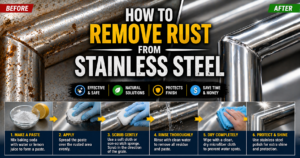
Tear off a small piece of aluminium foil, standard kitchen foil is fine. Dip it in water, then rub it gently over the rusted area using small circular motions.
What’s happening is a mild chemical reaction. Aluminium is more reactive than iron in the galvanic series, so it preferentially oxidises when it contacts the iron rust. The aluminium oxide that forms actually acts as a very mild polish, lifting the rust without scratching the chrome plating. It’s softer than chrome, so it can’t score the surface.
You’ll see a grey-black residue forming as you work that’s the reaction happening. Keep rubbing, add more water if needed, and wipe clean with a cloth. For light to moderate rust spots, this often clears the surface completely in a few minutes.
When to use it
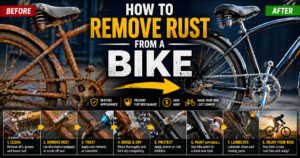
Surface rust spots, brown staining, light oxidation on chrome trim, bumpers, bathroom fittings, bike parts, and wheel rims. It’s your go-to first step before trying anything else. If you’re working on a bike, the same approach applies to other rusted components see our guide on how to remove rust from a bike for the full picture.
Its honest limit
It won’t touch heavy rust or blistered plating where the steel underneath has been significantly corroded. Don’t expect it to fix what’s been neglected for years.
Free Rust Removal Guide
Get our complete step-by-step rust removal guide covering every method, surface type, and product. Free to download.
For Stubborn Rust: Fine Steel Wool and Chrome Polish
When foil alone isn’t shifting it, step up to #0000 grade steel wool, the finest grade available. Any coarser and you risk visible scratches. Use it dry or with a drop of chrome polish, working in small circles with very light pressure. You’re not trying to grind the rust off; you’re gently abrading it away while the polish lubricates and lifts the particles.
Follow up immediately with a dedicated chrome polish. Products like Autosol, Mothers Mag, or similar metal polishes restore the reflective finish and leave a protective layer that slows future oxidation. Apply with a soft cloth, work in small sections, and buff off before it dries completely.
Baking soda paste for spot treatment
Mix baking soda with just enough water to form a thick paste. Apply it to the rusted spot, let it sit for 10–15 minutes, then scrub with a soft cloth or an old toothbrush. It’s mildly alkaline and abrasive enough to shift light rust without risk to the plating. Rinse thoroughly and dry moisture completely, which is how you got here in the first place.
Vinegar: Use it carefully
White vinegar’s acetic acid does dissolve rust, but chrome plating doesn’t love prolonged acid exposure. If you use it, keep contact time short, soak a cloth, apply for no more than 5–10 minutes, then neutralise with a baking soda and water rinse. Don’t submerge chrome parts in vinegar the way you might with bare steel tools. Our article on removing rust with vinegar explains the chemistry in more detail, the principles apply, but chrome needs a gentler hand than bare metal does.
Protecting Chrome After Cleaning
A freshly cleaned chrome surface is the most vulnerable it’ll ever be. Get protection on it quickly.
Apply a thin coat of car wax, chrome sealant, or even clear paste wax and buff it in. This creates a hydrophobic barrier that sheds water and slows the return of oxidation significantly. For high-exposure areas, vehicle trim, outdoor fittings, and marine equipment — reapply every few months.
For chrome in humid environments (bathrooms, garages near coastlines), a light spray of WD-40 after cleaning works as a short-term moisture barrier. It’s not a permanent solution, but it buys time between proper treatments. Understanding what WD-40 actually does to rust helps set realistic expectations for it.
Counterintuitively, keeping chrome clean is more important than keeping it polished. Brake dust, road grime, and salt deposits all trap moisture against the surface and accelerate the very corrosion you’re trying to prevent. A quick rinse and dry after exposure to wet roads or salt spray makes a significant difference.
When the Damage Is Beyond Home Treatment
Some chrome rust is past the point where DIY methods help. Signs you’re dealing with a bigger problem: the rust returns within days of cleaning, the chrome surface feels rough or uneven even after treatment, or you can see the plating physically separating from the base metal.
At that point, you have two realistic options. Replating is the proper fix for the old chrome is stripped chemically, the steel substrate is treated, and fresh chrome is applied. It’s expensive, but the only permanent solution for badly damaged sections. The alternative is chrome-look spray paint or vinyl wrap, which covers the damage cosmetically without addressing the underlying steel corrosion.
If you’re unsure whether your situation is salvageable or needs professional attention, the principles in our surface rust vs deep rust guide will help you make that call and our Ultimate Guide to Rust Removal covers the full range of options across all metal types.
The Rust Restoration Handbook
The complete professional reference for rust removal and metal restoration. Every technique, product, and process in one handbook.
The Short Version
Start with aluminium foil and water. It works on most surface rust and can’t damage the plating. Step up to #0000 steel wool and chrome polish if needed. Keep vinegar contact time short, avoid anything coarser than fine steel wool, and get a protective wax coat on as soon as the surface is clean. Catch rust early on chrome, and it clears up in minutes. Leave it too long, and you’re looking at replating. The method isn’t complicated, the timing is everything.