You pulled your grandmother’s cast-iron skillet from the back of the cabinet, and it’s covered in rust. Or maybe you left yours out after a camping trip and woke up to an orange disaster. Either way, here’s what most people get wrong: they think the pan is ruined. It isn’t. Remove rust from cast iron, and you’ll often find the pan underneath is in better shape than it looks. Cast iron is almost impossible to destroy it just needs attention.
This guide walks you through exactly how to do it. No specialist products required for most jobs.
What You’re Actually Dealing With
Cast iron rusts faster than most metals. That’s not a flaw, it’s just the nature of bare iron meeting moisture and oxygen. The seasoning layer (the polymerised oil coating that makes cast iron non-stick) is your only protection. Once that breaks down, from soaking in water, aggressive scrubbing, or just storage in a humid environment, rust forms quickly.
The good news: Rust on cast iron is almost always surface-level. It looks dramatic. It rarely goes deep.
There’s one exception worth knowing: if you can see pitting, actual holes or craters in the metal surface, the rust has eaten into the iron itself. You can still restore the pan, but it won’t be perfectly smooth. For most vintage and modern cast iron, though, pitting is rare. What you’re dealing with is surface oxidation, and that comes off.
What You’ll Need
Before you start, gather everything. Stopping halfway through is how pans get left wet and re-rust within the hour.
- White distilled vinegar (5% acidity)
- Water
- A large container or sink
- Steel wool (#00 or #0000 grade) or a stiff scrubbing brush
- Dish soap (yes, really just for this step)
- Paper towels or a clean cloth
- Cooking oil flaxseed, vegetable, or Crisco all work
- An oven
That’s it. No rust converters, no specialty cleaners. The vinegar does the chemical work; everything else is just follow-through.
Step-by-Step: The Vinegar Soak Method
This is the most reliable method for moderate to heavy rust. It works by using acetic acid to dissolve iron oxide — the same process described in detail in our guide on using vinegar to remove rust.
Step 1 – Mix your solution
Use a 50/50 mix of white vinegar and water. Don’t use undiluted vinegar on cast iron — it’s more aggressive than it needs to be and can damage the base metal if you leave it too long. A diluted solution gives you more control.
Step 2 – Submerge and soak
Place the pan in your container and cover it completely with the vinegar-water mix. If it floats, weigh it down.
Soak time depends on how bad the rust is:
| Rust Level | What It Looks Like | Soak Time |
|---|---|---|
| Light | Thin orange film, surface discolouration | 30 minutes |
| Moderate | Rough texture, patchy orange coating | 1–2 hours |
| Heavy | Thick crust, deep discolouration | Up to 8 hours |
Check every 30–60 minutes. You’re done when the rust scrubs off easily. Don’t leave cast iron in vinegar for more than 8 hours. Beyond that, the acid starts attacking the iron itself, not just the rust.
Step 3 – Scrub it out
Remove the pan and scrub immediately with steel wool or a stiff brush while it’s still wet. The rust should come away as a dark grey or brown sludge. Work in circular motions and get into any corners or ridges.
Stubborn patches? Return the pan to fresh solution for another 30 minutes and try again. Don’t force it with coarser abrasives — you’ll scratch the iron surface.
Step 4 – Wash with soap
This is the one time you use dish soap on cast iron. You need to remove all the acid residue, rust particles, and vinegar smell. Wash thoroughly, rinse well.
Don’t worry about soap damaging the seasoning — there’s no seasoning left to protect at this point. You’re starting fresh.
Step 5 – Dry immediately and completely
This step is where most people lose the pan. Bare iron starts rusting again within minutes of being left wet. Towel-dry every surface, then put the pan on a stovetop burner over medium heat for 2–3 minutes. You’ll see the moisture evaporate. The pan should be bone dry and slightly warm before you move to seasoning.
Free Rust Removal Guide
Get our complete step-by-step rust removal guide — covering every method, surface type, and product. Free to download.
Re-seasoning: The Step Most Guides Rush Through
Removing the rust is only half the job. A bare cast-iron pan will rust again overnight if you don’t season it immediately. This is where the real restoration happens.
Choosing your oil
Flaxseed oil is often recommended because it polymerises well at high heat. Counterintuitively, it’s also one of the more brittle seasonings and can flake with heavy use. Crisco or vegetable shortening builds a more durable layer for everyday cooking. Use what you have – the technique matters more than the specific oil.
The seasoning process
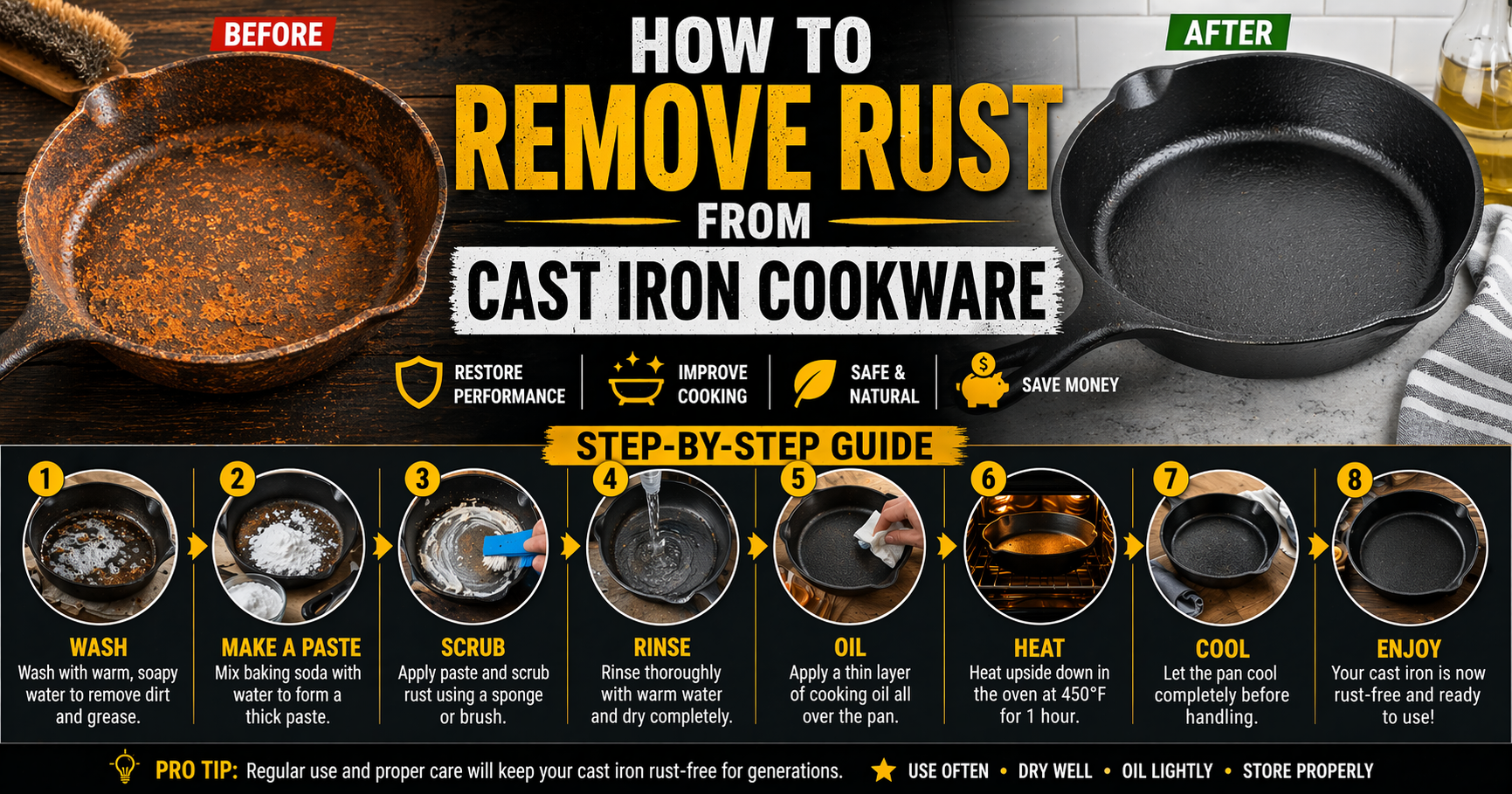
Preheat your oven to 230–250°C (450–480°F). While it heats, apply a very thin coat of oil to every surface of the pan inside, outside, handle, everything. Then wipe most of it off with a clean cloth. The layer should look almost dry. Too much oil and you’ll get a sticky, patchy result.
Place the pan upside-down on the middle oven rack with a sheet of foil on the rack below to catch drips. Bake for one hour. Turn the oven off and let the pan cool completely inside don’t rush it out into cold air.
One round of seasoning is a starting point, not a finish line. Your pan will get better with every use. Cook bacon in it, fry onions in butter, make cornbread — high-fat cooking builds seasoning faster than anything.
When Vinegar Isn’t Enough: Heavy Rust Options
Occasionally, you’ll find a pan that’s been neglected for years — thick rust, possible pitting, and previous attempts at cleaning that made things worse. Vinegar soaking still works, but you may need additional steps.
Electrolysis
For severely rusted cast iron, electrolysis is the gold standard. It removes rust without any mechanical scrubbing, which means zero risk of scratching the iron surface. The process uses a mild electrical current to convert iron oxide back into iron. It takes longer to set up, but the results are exceptional on pans that look completely lost. Our guide on electrolysis rust removal covers the full setup.
Citric acid powder
Available cheaply online or in homebrew shops, citric acid powder mixed with warm water is a faster alternative to vinegar for heavy rust. Use 1–2 tablespoons per litre of water. The same rules apply: check frequently, don’t leave it too long, dry and season immediately after.
Salt and oil scrub
For light rust spots that don’t warrant a full soak, coarse salt and a splash of cooking oil makes an effective abrasive scrub. Work it in with a cloth or paper towel, then rinse, dry, and oil the pan. It won’t touch heavy rust, but it handles early-stage surface oxidation quickly. You can read more about household rust removal methods in our guide on removing rust from cast iron and in the broader Ultimate Guide to Rust Removal.
Five Mistakes That Ruin Cast Iron Restoration
Most cast iron restoration failures come down to one of these:
- Soaking too long in undiluted vinegar. The acid will etch the iron surface and leave it rough and pitted where it wasn’t before.
- Leaving the pan damp for even five minutes. Flash rust forms almost immediately on bare iron. Dry it on the burner, not just with a towel.
- Applying too much oil when seasoning. A thick oil coat doesn’t cure – it stays sticky and pools. Thin and dry is what you’re aiming for.
- Seasoning at too low a temperature. Oil needs to reach its smoke point to polymerise properly. 230°C minimum.
- Expecting one seasoning round to be enough. It builds over months of use. Be patient with it.
Keeping Your Cast Iron Rust-Free
The maintenance routine is straightforward once you understand what cast iron actually needs. Moisture is the enemy; everything else is secondary.
After every use: wash with hot water and a stiff brush (a small amount of soap is fine), dry immediately on the burner over low heat, then wipe with a thin coat of oil while the pan is still warm. Store it in a dry place. That’s the whole routine. It takes about two minutes.
Avoid soaking in water, running through a dishwasher, or storing with the lid on when there’s any residual moisture inside. Do those three things and your cast iron will outlast you.
If you’re dealing with rust on other metal items around the house — tools, garden equipment, bike parts — the same principles apply. Check out our guides on removing rust from metal tools and how to prevent rust long-term for methods tailored to those surfaces.
The Rust Restoration Handbook
The complete professional reference for rust removal and metal restoration. Every technique, product, and process — in one handbook.
The Bottom Line
A rusty cast iron pan isn’t a bin job. Diluted vinegar, a good scrub, and a proper seasoning session will restore almost any pan to full cooking condition — often better than before. The process takes a few hours of soak time but less than 20 minutes of actual effort. Do it once, maintain it properly afterwards, and you’ll never need to do it again.
Cast iron is one of the few things made to last a lifetime. It just needs someone willing to put in a little work.