A rusted knife isn’t a ruined knife. Pull it out of the back of a drawer, spot those orange patches on the blade, and your instinct might be to bin it, but don’t. Removing rust from a knife is one of the faster metal restoration jobs you can do, and the results are almost always worth the effort. Even a blade that looks heavily corroded will usually come back to clean, sharp metal with the right approach. What matters is matching your method to the blade material and the rust severity. Get that wrong and you’ll either waste time with something too weak, or damage the blade with something too aggressive.
Know Your Blade Before You Start
Not all knives rust the same way, and not all knives should be treated the same way. The steel type determines which methods are safe.
Carbon steel blades rust easily and quickly. They’re common in Japanese kitchen knives, traditional hunting knives, and vintage blades. Carbon steel responds brilliantly to most rust removal methods, but it needs oil protection immediately after cleaning, or it’ll rust again within hours.
Stainless steel knives are more resistant, but not immune; surface rust and pitting can still develop, especially in humid storage or after prolonged moisture contact. They need gentler treatment because the passive chromium oxide layer that protects them can be damaged by harsh abrasives or extended acid exposure. Our full guide on removing rust from stainless steel covers the specific chemistry involved.
High-carbon stainless the most common material in quality kitchen knives, sits between the two. It rusts less readily than carbon steel but more readily than lower-grade stainless. Treat it like stainless: avoid coarse abrasives, keep acid contact time short.
Ceramic blades don’t rust. If you’ve got spots on a ceramic knife, that’s contamination from another source, not oxidation.
What You Actually Need
No specialist products required for most jobs. Here’s what works:
- White distilled vinegar
- Baking soda
- Lemon juice or citric acid powder
- Fine steel wool – #0000 grade only
- A cork (yes, a wine cork – genuinely useful)
- Potato and coarse salt (surprisingly effective on light rust)
- Mineral oil, food-safe oil, or camellia oil for finishing
- Soft cloths
For heavy rust that’s resisting household methods, a dedicated metal polishing paste or Bar Keepers Friend moves things along significantly. Keep coarse sandpaper and wire brushes away from blade steel entirely, you’ll scratch the finish and create micro-grooves that trap moisture and accelerate future rusting.
Method 1: The Cork and Salt Trick – For Light Surface Rust
Cut a potato in half, dip the cut face in coarse salt, and rub it along the rusty sections of the blade. The oxalic acid in the potato reacts with the iron oxide, while the salt acts as a mild abrasive. It sounds like folklore. It genuinely works on light rust, particularly on kitchen knives.
Alternatively, and even more effectively, dip a wine cork in baking soda and use it as a scrubbing tool directly on the rust. The cork is firm enough to scrub but soft enough that it won’t scratch the blade steel. Work in the direction of the blade’s finish grain, not across it.
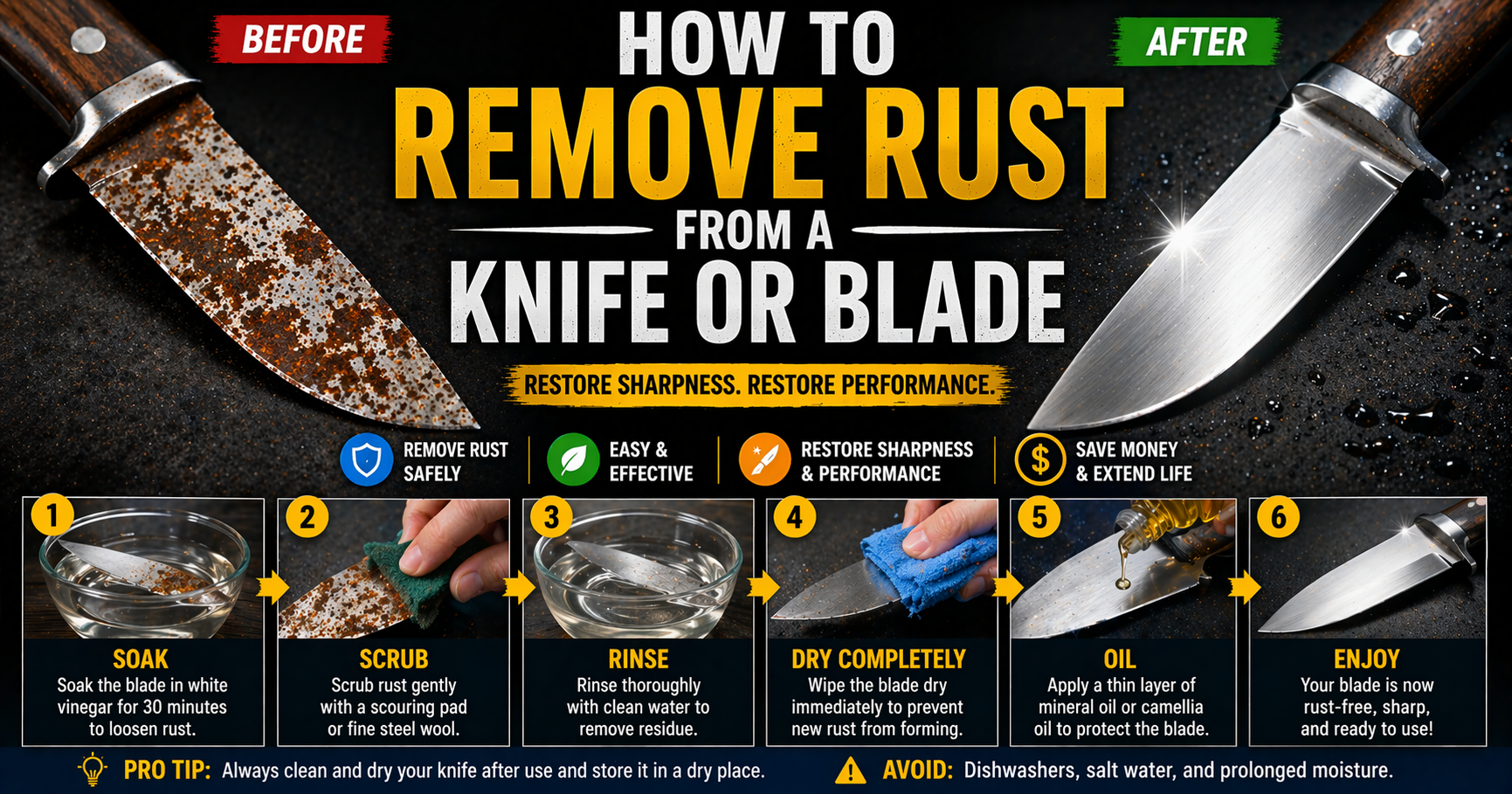
Rinse the blade after treatment, dry immediately and completely, then apply a thin coat of food-safe mineral oil. Don’t skip the oil step. A bare blade that’s just had its rust removed is more vulnerable to re-rusting than one that was never touched.
Honest limitation
Neither method will make a dent on moderate or heavy rust. They’re maintenance tools, not restoration tools. If you’ve got thick orange crust or pitting, move to the methods below.
Method 2: Vinegar Soak – The Go-To for Moderate Rust
White vinegar is the most reliable household rust remover for knife blades. The acetic acid dissolves iron oxide directly. Submerge the blade (handle up, or remove the blade entirely if possible) in undiluted white vinegar and leave it to soak.
Timing is critical here:
| Rust Level | Appearance | Soak Time |
|---|---|---|
| Light | Thin orange film, smooth blade underneath | 15–30 minutes |
| Moderate | Rough patches, visible discolouration | 1–2 hours |
| Heavy | Thick crust, possible pitting | Up to 4 hours – check hourly |
Don’t leave a quality blade soaking overnight. Prolonged acid exposure etches the steel surface and can dull a blade’s edge geometry. Check every hour on heavy rust jobs. When the rust scrubs off easily with #0000 steel wool or a soft cloth, you’ve soaked long enough.
After removing from the soak, neutralise the acid by rinsing in a baking soda and water solution (one tablespoon per cup of water), then rinse with clean water and dry completely. Oil the blade immediately.
Free Rust Removal Guide
Get our complete step-by-step rust removal guide – covering every method, surface type, and product. Free to download.
Method 3: Baking Soda Paste – Gentle Enough for Stainless
Mix baking soda with a small amount of water to form a thick paste. Apply it to the rusted areas and work it in with your fingers or a soft cloth, following the blade’s grain direction. Leave it for 10–15 minutes, then scrub gently and rinse clean.
This is the safest method for stainless steel kitchen knives and high-carbon stainless blades, where you want to avoid any risk of surface damage. It’s slower than vinegar on moderate rust, but it won’t compromise the passive layer that gives stainless its corrosion resistance. Use it as your default approach on good kitchen knives before reaching for anything more aggressive.
Dealing with Rust on the Blade Edge
Rust along the cutting edge needs careful handling. The edge geometry is what makes a knife useful, and aggressive scrubbing at the wrong angle can alter the bevel. Work parallel to the edge, not across it. Use the lightest abrasive that still shifts the rust. Start with baking soda paste, move to #0000 steel wool only if needed.
After rust removal, the edge will almost certainly need resharpening. Rust pitting along the edge creates micro-serrations that make the knife feel sharp in some spots and grab in others. A proper sharpening session on a whetstone or sharpening rod brings it back to consistent performance. Don’t skip this step if you want a blade that actually works well again.
Counterintuitively, a slightly duller blade stored properly will outperform a sharper blade stored badly every single time. Rust damage accumulates with each cycle of corrosion and removal. The storage habits matter more long-term than the sharpening.
Finishing and Protection: The Step That Prevents the Next Rust Job
This is where most people underdo it. They clean the rust, feel satisfied, and put the knife away. Within weeks, surface rust is back. Here’s the routine that actually keeps blades clean:
After every use: wash, dry immediately (don’t leave in a drying rack), and store in a dry location. For carbon steel blades, wipe with a thin film of camellia oil or food-safe mineral oil after every wash. It takes ten seconds and makes a dramatic difference in how long the blade stays clean.
Storage matters significantly. A knife block or magnetic strip in a dry kitchen is fine. A drawer where blades rub against other metal, or a damp environment near a sink, isn’t. If you’re storing blades long-term, wrap them in a lightly oiled cloth.
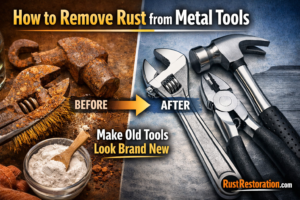
For other tools and blades around the workshop, the same principles apply: dry storage, thin oil protection, and prompt treatment of any rust that does appear. Our guide on removing rust from metal tools covers broader workshop tools, and the rust prevention guide goes deep on long-term protection strategies for all metal types.
When the Pitting Is Too Deep
Heavy rust pitting along the flat of the blade, and actual craters in the steel surface won’t disappear with cleaning. You can remove the active rust, but the physical damage to the surface remains. On a working knife, this is mostly a cosmetic issue. The blade still functions.
On a high-value knife where appearance matters, a knife restoration specialist can remove pitting through progressive polishing — working through finer and finer grits until the surface is flat and clean again. It’s time-consuming but genuinely restores the blade completely. Worth it for a quality Japanese kitchen knife or a treasured heirloom blade. Not worth it for a £10 supermarket paring knife.
If you’re dealing with serious rust across multiple items, not just knives, but tools, cast iron, or vehicle parts, the Ultimate Guide to Rust Removal gives you the full picture of methods, products, and when to call in professional help.
The Rust Restoration Handbook
The complete professional reference for rust removal and metal restoration. Every technique, product, and process in one handbook.
A Rusty Knife is a Fixable Knife
Match the method to the blade material and the rust severity, keep acid contact times short on quality steel, neutralise and oil immediately after cleaning, and store the blade dry. Light rust comes off in minutes. Heavy rust takes an hour or two of soak time and a bit of scrubbing. Either way, the blade comes back. The ten seconds of oiling after each wash that prevents the whole situation is the real lesson here, but now you know how to fix it when it happens anyway.